Weird and Wonderful Animals on Etruscan Mirrors
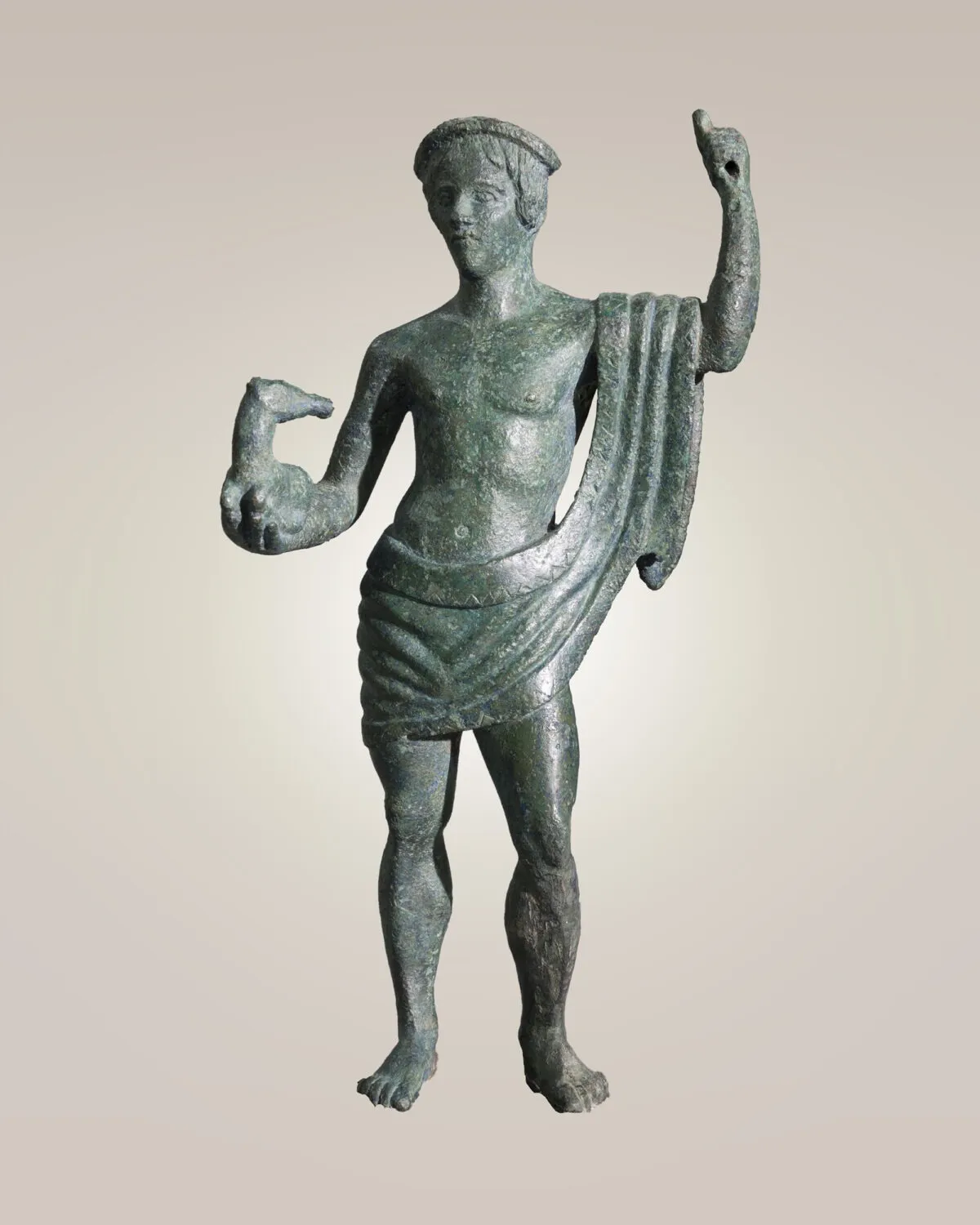
Etruscan mirrors (most date to ca. 500-200 BCE) are an important source for depictions of animals and their interactions with humans, especially women. Animals in the ancient world, whether real, fantastic, domesticated or wild, can inform us about many aspects of ancient life, whether domestic life, religion, or the zoological world of the ancient imagination. But in Etruscan art animals often show up in surprising and unexpected ways, especially in mythic and religious contexts. For instance, the winged Lasa, a uniquely Etruscan divinity, is sometimes depicted with a deer. And although often ignored in the scholarship, interesting animals sometimes appear in contexts of divination or prophecy, such as birth and wedding scenes. Were the animals simply “filler” for the scene, or did they carry some deeper meaning or purpose? This talk will examine some of these weird and wonderful animals and their association with humans, especially women, in a variety of mirror scenes for what they may tell us about Etruscan culture.
Lectures are offered free with the cost of daily admission:
Art+ Museum Members: Free
Not-Yet-Members: $25
College Students: Free
RSVP for this program
Lora Holland Goldthwaite completed her BA in Classics from the University of Texas at Austin and a Masters in Classical Studies from the University of Michigan at Ann Arbor in the 1980s. After some years teaching Latin and Greek in the secondary schools in Louisiana and North Carolina, she earned a PhD in Classics from the University of North Carolina at Chapel Hill in 2002. She is Professor Emerita of Ancient Mediterranean Studies at the University of North Carolina at Asheville, and currently is pursuing an active research agenda as Visiting Scholar in the Classics Department of the University of North Carolina at Chapel Hill.
Her primary areas of interest are Etruscan, Greek, and Roman religion, Roman Republican coinage, and ancient animal studies. Her publications include a co-edited volume, At the Crossroads of Greco-Roman History, Culture and Religion: Papers in Memory of Carin M. C. Green, and Treasure of Chianti: Silver Coinage of the Roman Republic from Cetamura del Chianti. Her current projects include a monograph on the deer of Artemis, Artumes, and Diana, and various articles on artifacts from Cetamura, Etruscan mirrors, and ancient deer.
Image Caption: Aplu with Fawn. Bronze figurine; Etruria, Italy; Classical period, ca. 375-325 ʙᴄᴇ. TAMPA MUSEUM OF ART, BEQUEST FROM THE ESTATE OF DR. RICHARD E. AND MRS. MARY B. PERRY, 2022.010
More at this venue
 Sun, Nov 8, 10:00 AM
Ceramics Continued Study
Talks, classes & workshops · Tampa Museum of Art
from $45
 Tue, Nov 10, 10:00 AM
Studio 55 | Ceramics Continued Study
Talks, classes & workshops · Tampa Museum of Art
from $20
 Sat, Nov 14, 10:00 AM
Studio 55 | Ceramics | November
Talks, classes & workshops · Tampa Museum of Art
from $120
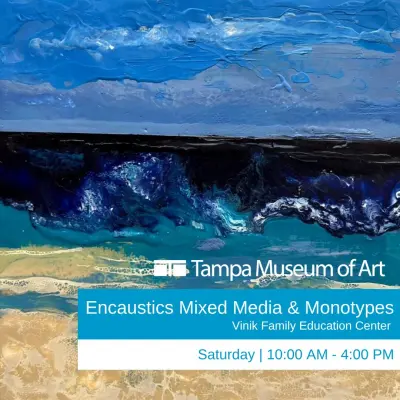 Sat, Nov 14, 10:00 AM
Encaustics Mixed Media & Monotypes
Talks, classes & workshops · Tampa Museum of Art
from $150
Sun, Nov 15, 10:00 AM
Ceramics Continued Study
Talks, classes & workshops · Tampa Museum of Art
from $45
Tue, Nov 17, 10:00 AM
Studio 55 | Ceramics Continued Study
Talks, classes & workshops · Tampa Museum of Art
from $20